
Surfers Paradise weather and the coastal climate
Surfers Paradise weather is useful to consider at two different scales. Monthly climate figures help you compare the warmer and cooler parts of the year, while the forecast helps you decide what to do during your stay. For the climate comparison here, the Bureau of Meteorology's Gold Coast Seaway station supplies the temperature and rainfall figures. Use them as coastal background for planning, then look at current conditions before a beach visit or an excursion.
The table is the BoM series labelled “All years of record”, station 040764, with a table date of 31 October 2026. The temperature observations cover 1992 to 2026 and rainfall covers 1994 to 2026. There are gaps and differing numbers of valid years between the series. These are historical statistics, not a forecast or a fixed climate normal period.
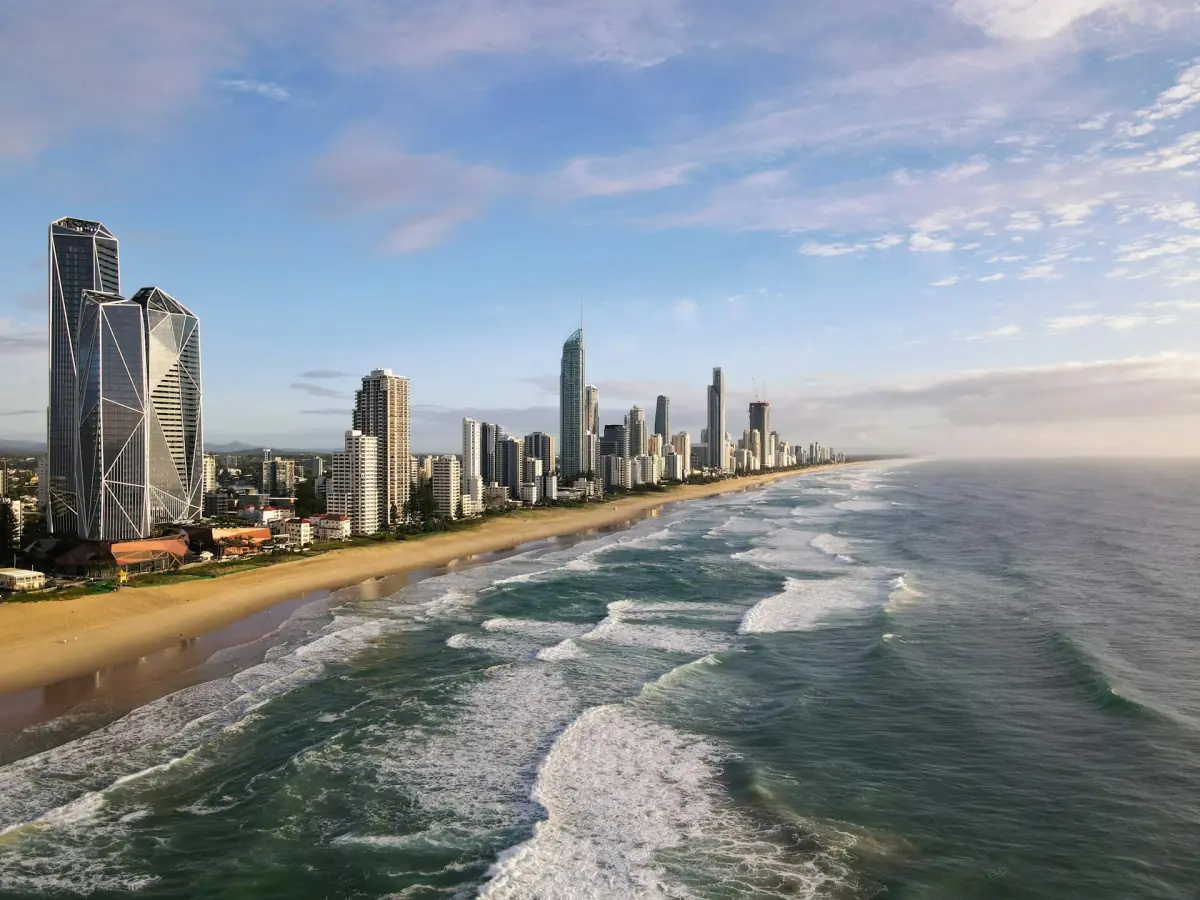
Monthly temperatures and rainfall
The maximum column is the mean of daily maximum temperatures, and the minimum column is the mean of daily minimum temperatures. Neither column describes record extremes. Rainfall is the monthly mean, rather than the median. The different observation periods matter when reading the columns together: this table summarises the available station record, not a single identical set of years for every measurement.
| Month | Mean maximum °C | Mean minimum °C | Mean rainfall mm |
|---|---|---|---|
| January | 28.9 | 21.9 | 139.7 |
| February | 28.7 | 21.8 | 183.2 |
| March | 28.0 | 20.9 | 167.3 |
| April | 26.1 | 18.3 | 118.5 |
| May | 23.6 | 15.5 | 112.7 |
| June | 21.5 | 13.2 | 99.2 |
| July | 21.2 | 12.1 | 52.1 |
| August | 22.2 | 12.6 | 53.8 |
| September | 24.0 | 14.9 | 41.9 |
| October | 25.5 | 17.1 | 88.5 |
| November | 26.8 | 19.0 | 114.0 |
| December | 28.0 | 20.6 | 137.5 |
January has the highest mean daily maximum in this series and July the lowest. February has the largest monthly rainfall mean, while September has the smallest. July to September have lower monthly rainfall means than the summer peaks. That pattern can help you choose what to pack and how much flexibility to leave, while the forecast addresses the conditions expected on your chosen day.
Look at both temperature columns when arranging a day that extends into the evening. The daytime maximum gives a different perspective from the overnight minimum. For seasonal wildlife priorities, use the best time to visit guide, which compares whale and glow worm activity without turning those biological patterns into weather predictions.
Our picks: weather
Our take: Weather affects ocean trips and sightings are not guaranteed.
Hand-picked tours, booked through Viator. Prices are indicative starting prices in Australian dollars (as of October 2026). Tap a tour for live availability and the current price in your currency.
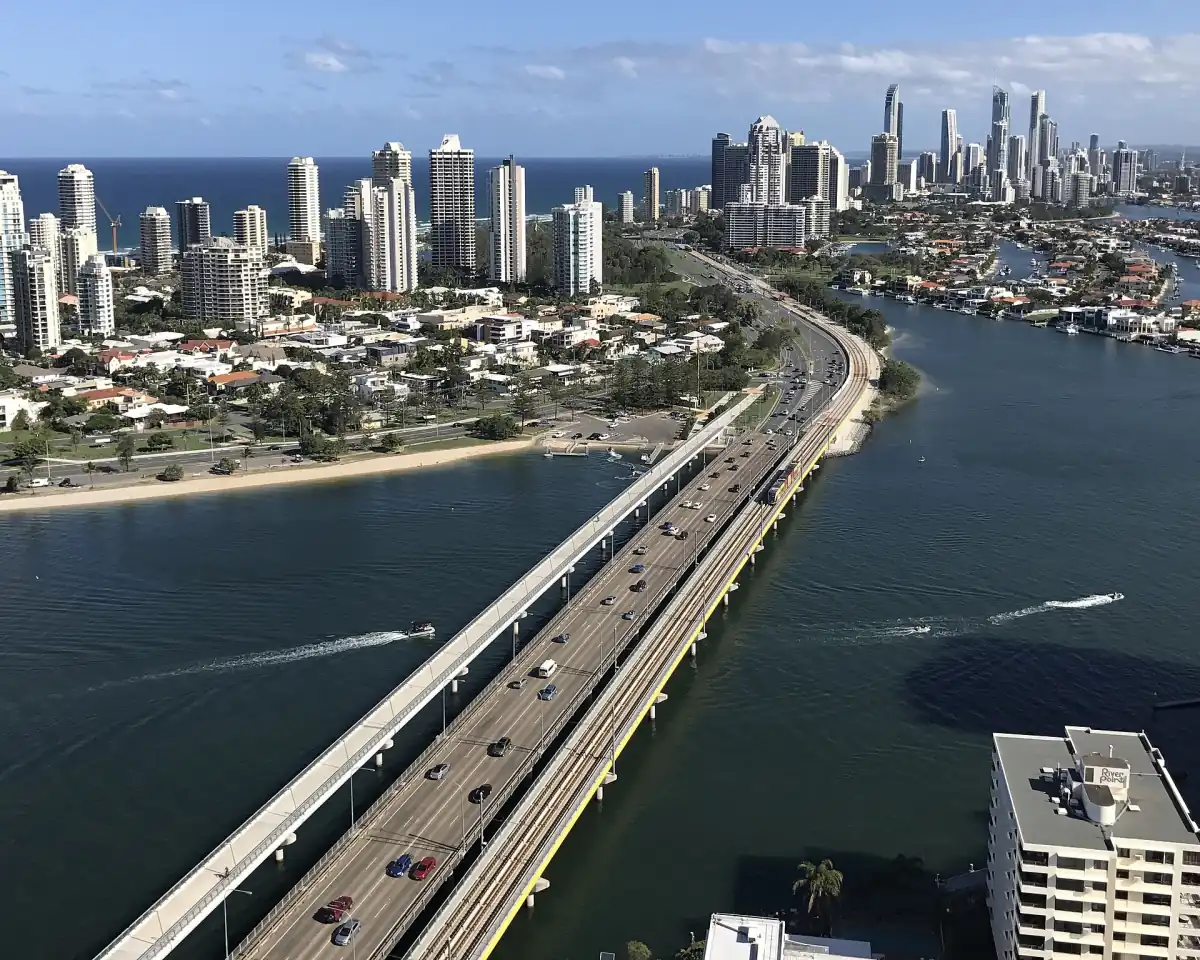
Whale watching with weather in mind
An ocean whale watching option for a suitable seasonal departure. Its listed inclusions cover fees and taxes; plan the meeting journey separately.
Beach conditions, sunshine and swimming
Warm air and a clear view of the beach are not enough to decide where to swim. Under SLSQ guidance reviewed on 5 November 2026, use patrolled beaches, swim between red and yellow flags and follow local signs and lifeguards' advice. A red flag means do not swim. Rip currents can move quickly, so a familiar-looking stretch of water still needs attention on the day.
The same SLSQ guidance recommends protective clothing, a broad-brimmed hat, sunglasses and shade for sun protection. Include those in your beach planning rather than judging your exposure only by how warm the air feels. Our Surfers Paradise Beach guide explains the patrol schedule and local flag system in more detail. The monthly table here describes air temperature, so use it for clothing decisions rather than as a measure of the water.
Rainforest walks and ocean departures
For a walking day, weather and access need to be considered together. QPWS advises against crossing flooded creeks and warns that heavy rain or wind can lead to short-notice access restrictions. Select the route with those conditions in mind, follow barriers and avoid making a coastal rainfall average your only test for a hinterland outing. The Springbrook route guide covers the separate park areas and dated restrictions.
Boat plans also need the right geographical context. Whale watching takes place on the ocean, whereas the local sightseeing and dining cruises described in the guide use rivers and canals. Their settings are different, so an account of a river outing does not tell you what the sea will be like. Use the whale watching page to compare the seasonal departures and meeting arrangements.
BoM's Australian tropical cyclone guidance, updated in October 2025, gives November to April as the official season. Tropical lows can also produce heavy rain, flooding, large waves and storm surge away from their centre. Keep current warnings separate from the climate table: historical averages are a planning aid, while warnings concern a developing event and the decisions you need to make now.
Weather questions
Is the monthly table a forecast?
It is a historical station summary dated 31 October 2026. Use a current forecast for your travel dates and local advice for each activity.
Which month has the lowest mean rainfall?
September has the lowest monthly rainfall mean in the available Gold Coast Seaway series. That does not promise dry weather for a particular visit.
Does a warm day mean good whale watching conditions?
Air temperature alone does not describe the ocean. Choose an available seasonal departure and follow the crew's operational advice for the day.