
Visiting Surfers Paradise Beach
Surfers Paradise Beach is the oceanfront focus of this part of the Gold Coast in Queensland. The foreshore promenade links the beach setting with the central streets around Cavill Avenue. Plan the visit around what you want to do: walk along the promenade, swim within the patrolled area, join a surf lesson or visit the beachfront markets. The same stretch of coast serves different activities, with the flags and signs determining where swimming belongs.
Before entering the water, find the lifeguards and read the signs for that location. A photograph of a broad beach or an advertised patrol schedule is not a report on the day's conditions. The safety guidance here reflects the information checked on 5 November 2026; follow the instructions displayed during your visit. For transport, use our arrival and local connections guide, then locate the beach entrance that suits your route.
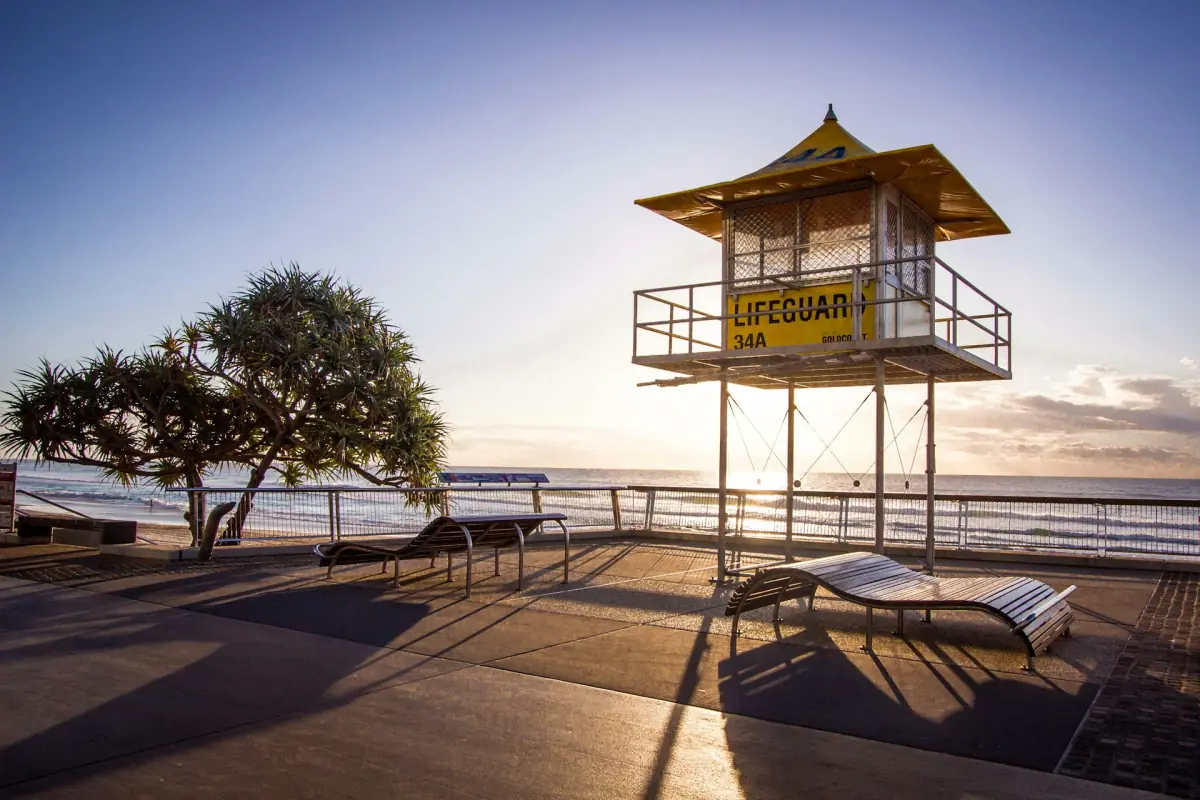
Lifeguard hours and the flags on the day
The municipal surf safety card gives a regular patrol schedule of 08:00 to 17:00. Surfers Paradise at tower 34, Clifford Street at tower 33, Elkhorn Avenue at tower 35 and Staghorn Avenue at tower 36 are marked as patrolled daily throughout the year. These are reference points for finding the service, not general opening hours for the beach or a promise that swimming is permitted throughout that period.
Additional volunteer weekend patrols run from September to April according to the local lifesaving club. Keep that volunteer season separate from the year-round municipal service. For a swim, use the area between the red-and-yellow flags and ask the lifeguards about conditions. A red flag means do not swim. A yellow flag signals caution, while black-and-white flags identify a surfcraft area. Stay attentive to the markings rather than choosing a spot simply because other people are in the water.
Children need active supervision. Make the swimming plan together before reaching the water, and keep the marked area as the reference point during the visit. If the local instructions rule out swimming, keep the outing on the promenade instead of moving to an unmarked section in search of an alternative.
Currents, warning signs and sun protection
Rip currents can move quickly. Possible signs include deeper or darker water, fewer breaking waves and sand or floating material moving seaward. These clues help explain why a seemingly calmer gap is not a place to choose for a swim. Lifeguard advice and the marked swimming area remain the practical starting points, even when the sea looks inviting from the promenade.
If you get into difficulty, the lifesaving guidance is to stay calm, conserve energy, float and raise an arm to signal for help. Local warning signs also cover bluebottles and marine stingers. Read those signs and ask the patrol about the situation rather than applying a seasonal rule from another Queensland destination. Plan your activities around the conditions you find at this beach.
For sun protection, the lifesaving guidance checked on 5 November 2026 includes protective clothing, a broad-brimmed hat, shade and sunglasses. It specifies water-resistant sunscreen of at least SPF 30, applied at least 20 minutes before exposure and reapplied every 2 hours. Pack for time on the promenade as well as time in the water. For climate context rather than a forecast, see the weather guide.
Our picks: beach
Our take: Two hours of instruction are included; the listed total duration varies by option.
Hand-picked tours, booked through GetYourGuide. Prices are indicative starting prices in Australian dollars (as of October 2026). Tap a tour for live availability and the current price in your currency.
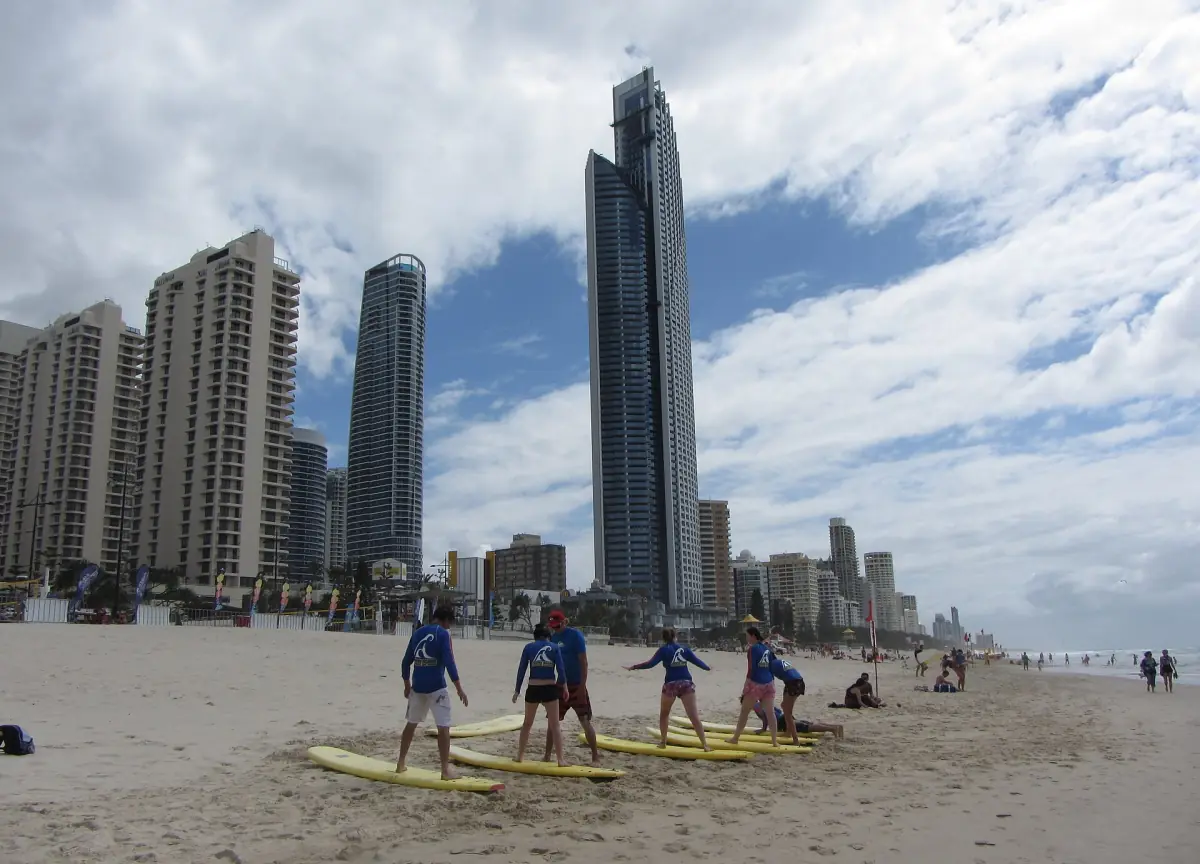
Surf instruction in Surfers Paradise
The central lesson includes two hours of instruction, a soft-top board, a long-sleeved rash shirt or wetsuit and sunscreen.
Surf lessons and the promenade
The featured surf lesson meets at 8 Cavill Avenue in Surfers Paradise. Its inclusions specify two hours of teaching by a Level 1 qualified instructor, a soft-top surfboard, a long-sleeved rash shirt or wetsuit, and sunscreen. Bring your own towel and swimwear and make separate arrangements for food and drinks. Keep the lesson's meeting point distinct from the swimming flags you use during an independent beach visit.
Other regional lessons use different locations, including The Spit, Palm Beach and Tallebudgera. Our surf lesson comparison explains those starts. Choose a lesson by its own location and inclusions, rather than assuming that every Gold Coast course begins at the central Surfers Paradise beach.
The beachfront markets take place on the foreshore and Esplanade. Their regular schedule is Wednesday, Friday and Saturday, 16:00 to 21:00, with free market admission, as checked on 5 November 2026. Combine an evening market visit with a promenade walk; an evening outing should not be planned as a patrolled night swim.
Access and parking
Choose your beach entrance from the address or stop you are using. If you need a particular accessible route, obtain details for that entrance and your journey to it. Compare accommodation areas by the actual route to the foreshore. Central parking includes paid garages near Appel Park; check the charge and conditions at your chosen car park rather than treating market admission as a parking offer.
Beach visit questions
Where should I swim?
Swim between the red-and-yellow flags at a patrolled beach, read the signs and ask the lifeguards about current conditions. A red flag means do not swim.
Are the patrol hours the beach opening hours?
The published 08:00 to 17:00 municipal schedule describes the patrol service. The flags and instructions at the beach determine whether and where to swim during your visit.
What do I bring to the central surf lesson?
Bring swimwear and a towel. The lesson includes a soft-top board, a rash shirt or wetsuit, sunscreen and two hours of instruction. Food and drinks are separate.